



Prof. Zhang’s Lecture on Lu Xun’s Essays and Kollwitz’s Woodcuts
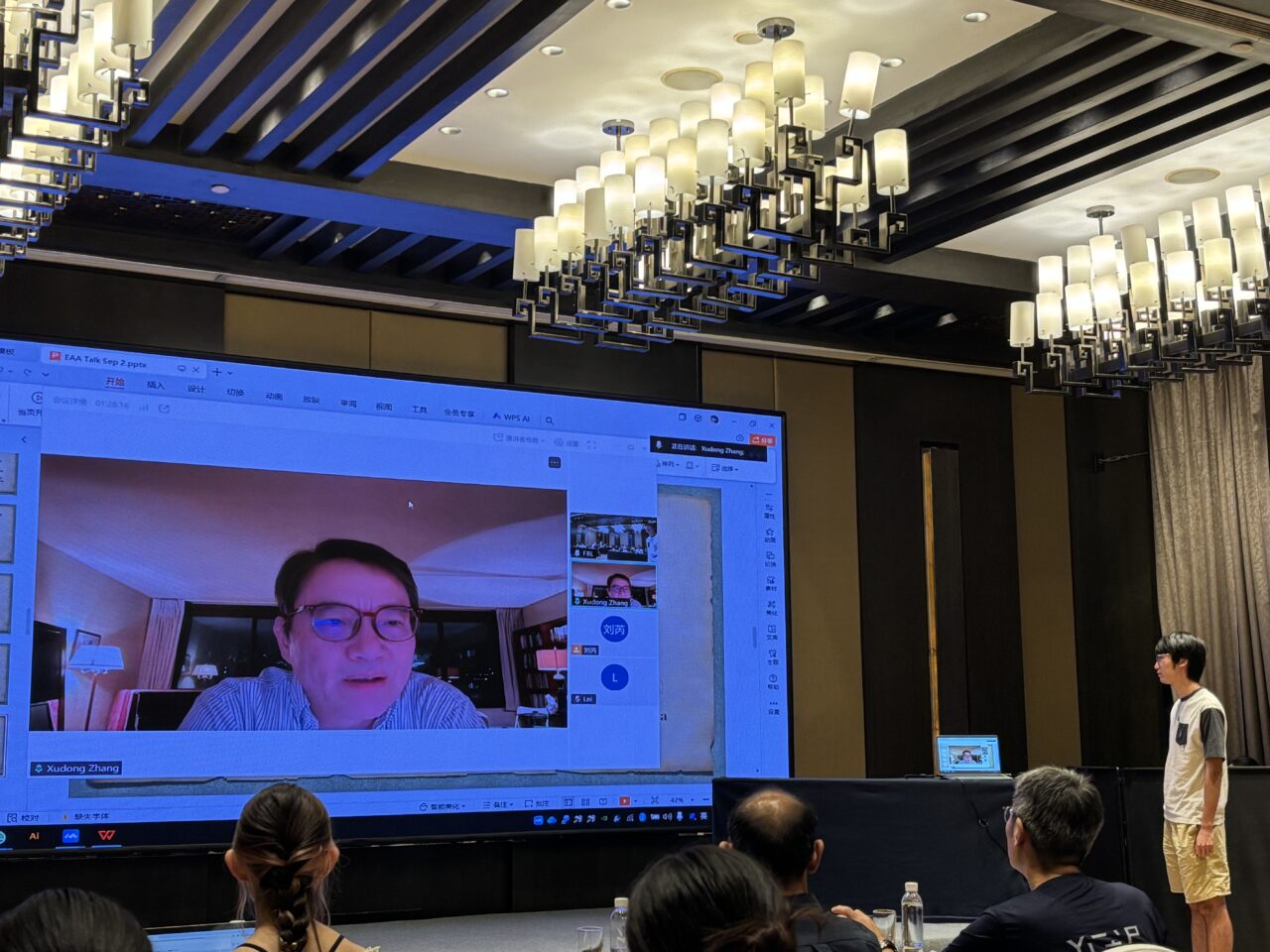
On the morning of the second day of our Summer Institute, Zhang Xudong, Professor of Comparative Literature and East Asian Studies at New York University, gave a lecture on Lu Xun’s unique art of writing, essays (zawen杂文), and the influence of a German woodcut artist, Käthe Schmidt Kollwitz. The professor’s main point was that Lu Xun was inspired by the simple and straightforward nature of Kollwitz’s woodcuts and developed the method of essays as a literary counterpart of her woodcuts.
The professor argued that, although his early works of short stories have established his monumental reputation, the development into zawen is more critical to Lu Xun’s literary career, as it was the first time for Lu Xun to attain the state of “self-consciousness.” He pointed out that this self-consciousness was cultivated during the transition period of 1925-1927, when Lu Xun faced a state of crisis, becoming aware of his own limitations. Also, the socio-political situation in China at the time and the conflicts Lu Xun faced made him pursue a literary method, which was different from the Western, modern pure art, and suited to deal with such “petty matters.” Thus, Lu Xun needed to reconstruct an idiosyncratic form of writing that matched his own talent as well as the thematic content of the suffocating nature of the unheard general public.
Although Lu Xun was a lifelong student of modern Western art, he thought that such an expensive, classical form of work was not suitable for the current stage of society in China, where the most significant mission of art was to express the immediate suffering and scars of the unheard public and to make such silenced voices audible. Classic Western modern art, such as novels in literature and oil paintings and sculptures in fine arts, requires a preceding accumulation of institutional, economic, and cultural wealth of Western Europe; we need palaces or art galleries to exhibit and appreciate classic paintings and sculptures. China at the time, in Lu Xun’s view, lacked them and called for a simpler, more straightforward way of art that gives voice to the silenced commoners. This kind of understanding of non-Western modernity led Lu Xun to develop a unique form of zawen, and he saw the fine-art counterpart of that in Kollwitz woodcuts.
Lu Xun was a dedicated collector of modern woodcut works from Germany, France, Russia, the UK, Japan, etc., and also became almost singlehandedly a promoter and patron of modern Chinese woodcut movements. He was especially attracted by the works of Käthe Kollwitz, a German female Expressionist artist in the late-19th to early 20th century. Her very simple and direct representation of people’s suffering in black and white with a somewhat crude touch corresponded with Lu Xun’s approach of zawen.
The asymmetrical interaction between two artists, Kollwitz on the one side, being the source of inspiration, and Lu Xun on the other side, being the interpreter and promoter of Kollwitz, highlights Lu Xun’s unique understanding of the non-Western concept of modernity and his self-conscious venture to develop a new form of literary art that suits such modernity.
Reported by UNO Yuho (The University of Tokyo)